Mutual Aid Partners turns six. Here's what $500 can do.
Mutual Aid Partners has helped Grand Junction families stay housed, access food and connect with local services since 2020. As the nonprofit turns six, its newest housing program is showing how far a small amount of direct help can go.
The Grand Junction nonprofit's newest program has moved about $22,000 in rent and deposit help, one household at a time. Its founder can tell you exactly what each piece of it does.
Five hundred dollars covers the deposit for a family that finally got a housing voucher and then hit a wall at move-in.
Five hundred dollars stops an eviction, while MAP coordinates with other agencies to make sure the fix actually holds instead of just delaying the same crisis by a month.
Five hundred dollars bridges the gap until a household gets its footing back.
That is the entire pitch behind Mutual Aid Partners' Give 5 for 5 Years campaign, which the Grand Junction nonprofit is wrapping up as it turns six this month. Since launching its Housing Stability initiative in 2025, MAP has put almost $22,000 into the hands of local families in the form of direct financial relief, either preventing a loss of housing or getting someone across the finish line into a home.
It is a small number by the standards of the state housing programs that get press releases. It is not a small number if it is your deposit.
"Nothing that I've created"
Ask Stephania Vasconez, MAP's founder and executive director, what the organization is actually for, and housing money is not the first thing she says.
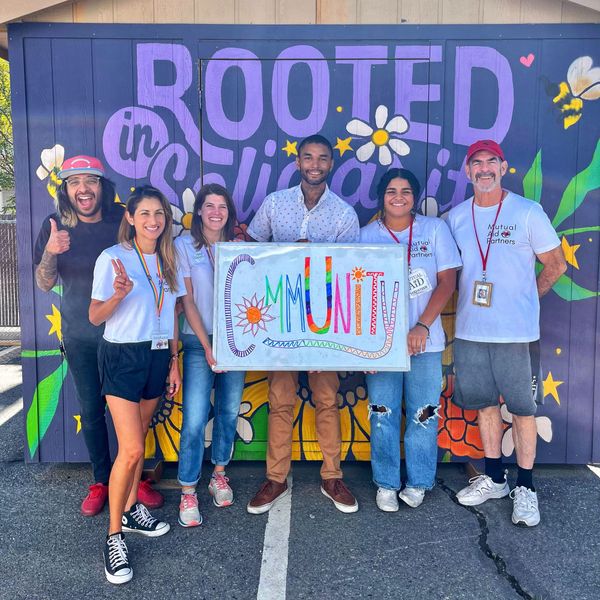
"I'd say community building," she said. "Just bringing community members of different backgrounds, socioeconomic, political, religious, and helping people understand that at the end of the day, we're all human beings. We all have the same needs."
Food is how MAP gets people in the door, because food is the one thing nobody can opt out of.
"Everybody needs to eat," Vasconez said. "So we do center that food access. But then recognizing that resource accessibility, and knowledge of what resources are out there, can also be really limited depending on who you are."
She is quick to say she did not invent any of this. Mutual aid as a practice is centuries old. "It's a concept. It's a movement. Nothing that I've created."
What she did do was start something in 2020, during a stretch when the two halves of the problem were pulling in opposite directions. Organizations were closing their doors, cutting hours, eliminating outreach entirely. Meanwhile people were desperate to be useful.
"People that were just like, I'm a healthcare worker, I still want to help, I just can't help under my organization umbrella," Vasconez said. "People needed to stay inside, but then people were just craving that connection."
That is the part that has stuck with her. Loneliness turned out to be a basic need going unmet, right alongside groceries.
Who actually shows up
The biggest misconception about MAP, Vasconez said, is that it serves only unhoused neighbors.
"When people actually come to the event, they see people that they didn't expect to see. That's kind of been the biggest feedback. You just never know who needs that support."
Students. Domestic violence survivors. Veterans. Working families. Immigrants. Seniors. People who were fine last year.
"People don't make the choice to be unhoused," she said. "They don't just wake up one morning, or when they're little, they're not like, when I grow up I want to be unhoused."
There is a version of this work that keeps a hard line between the people who give and the people who receive. MAP does not run that way on purpose.
"Even our volunteers are there getting something. They're exchanging energy," Vasconez said. "Most of our volunteers are also our participants. They're also picking up supplies, and they're donating."
Tuesday, 10 to 12:30
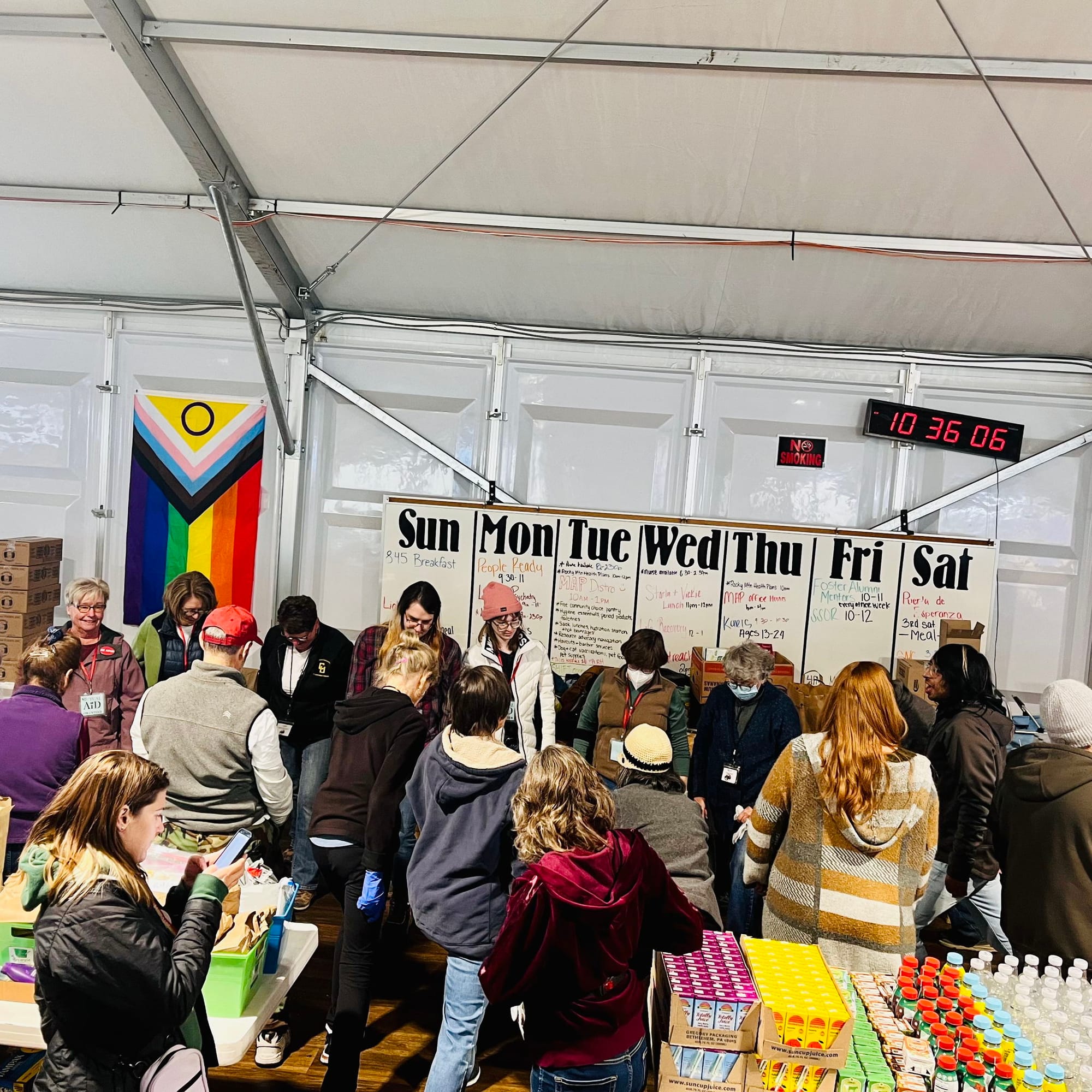
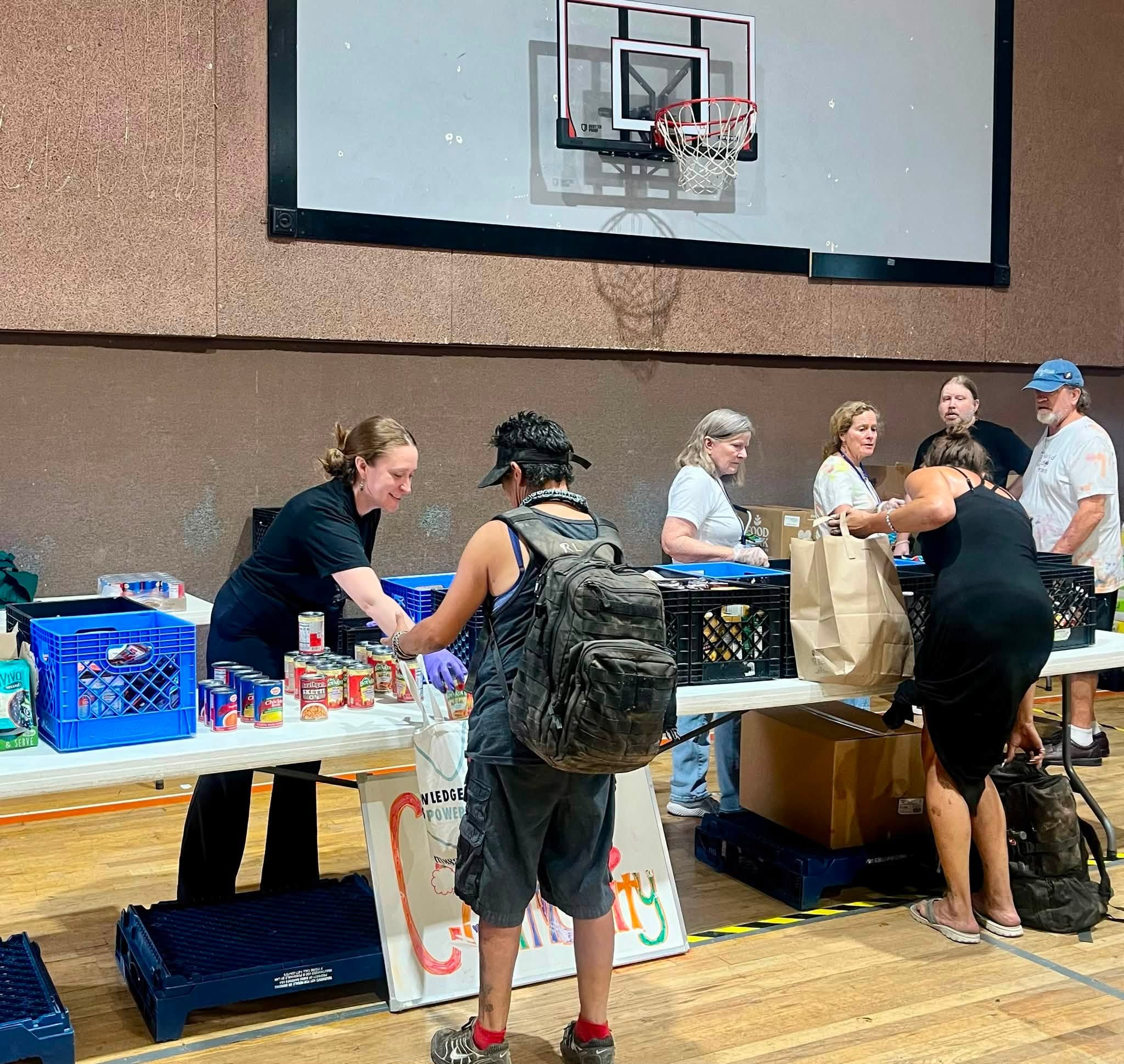
Every Tuesday morning, volunteers turn a gym in downtown Grand Junction into something closer to a farmers market than a food line. The pantry is choice-based, meaning people take what they want rather than accepting a prepacked box. Fresh produce, frozen meat, shelf-stable goods, rescued groceries. Sack lunches, hot drinks, a hydration station. Hygiene supplies and period products. Pet food, through Colorado Pet Pantry and Roice-Hurst Humane Society.
Running one Tuesday takes about 30 volunteers.
The food is the draw but the rotating partner table is the big value add. Rather than sending someone in crisis on a tour of four offices and five phone numbers, MAP brings the offices to the room.
Some partners come weekly: United Way mobile outreach, Neighbor2Neighbor street outreach, a registered nurse from HomewardBound, and Rocky Mountain Health Plans for Medicaid and Medicare care coordination. Others rotate. Grand Valley Connects works benefit applications on the first and third Tuesdays. Western Colorado Health Network brings harm reduction on the second, alongside Hilltop for family navigation, domestic violence services and brain injury support. Mesa County Public Health comes the third Tuesday, Center for Independence the fourth, Western Region One Source for veterans on the last.
Seasonal partners fill in the rest of the calendar, and the list reads like an inventory of the things that quietly sink a household. Tax credit help starting in February. Voter registration starting in July. LEAP energy assistance from November through April. Peace and Justice Center and DMV2Go rotating through quarterly to help people get an ID, which is the invisible prerequisite for nearly everything else.
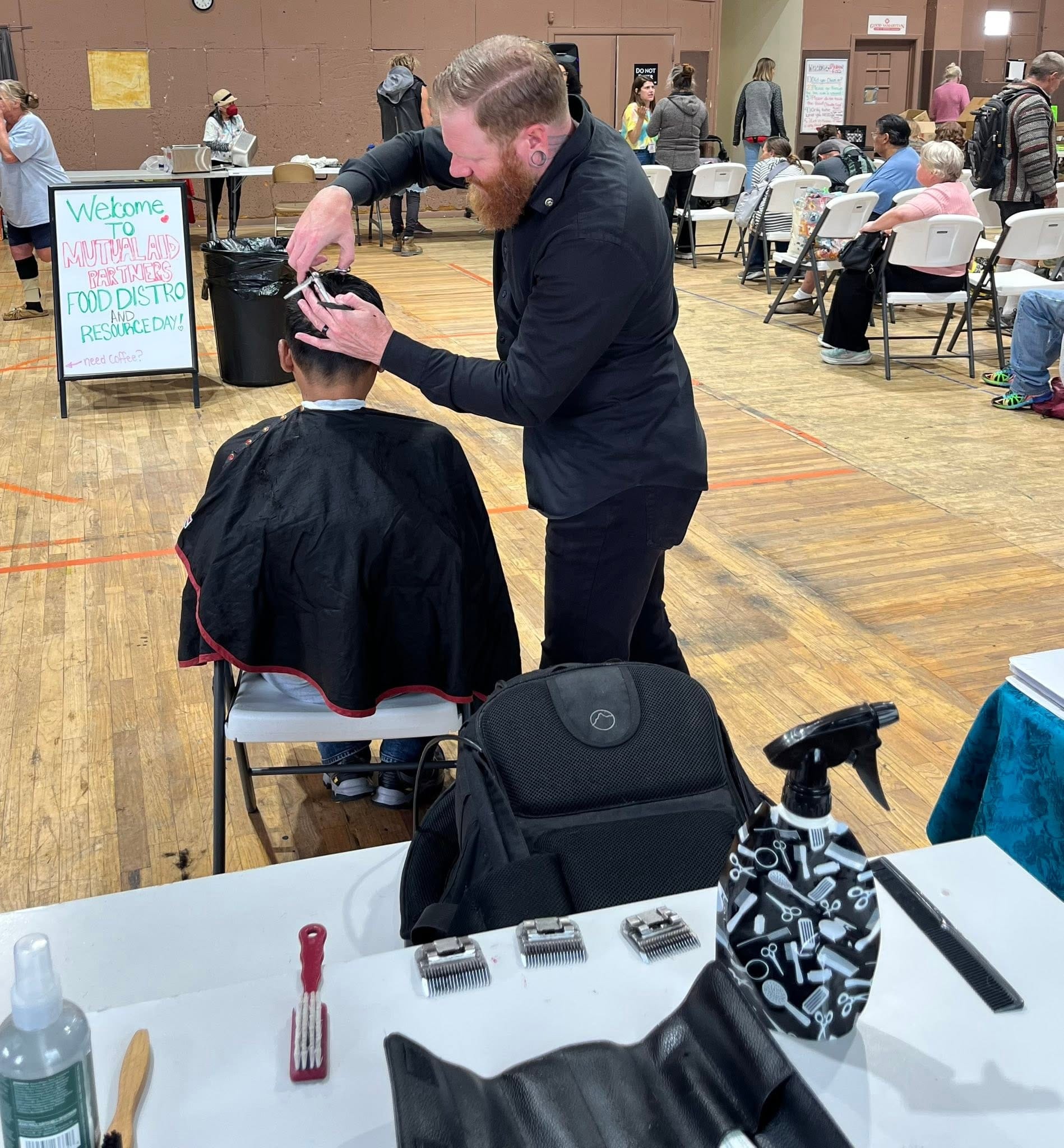
There are also haircuts, which people tend to underestimate until they think about walking into a housing appointment feeling like themselves.
The building they do not have
MAP has never owned a space. That is a constraint, not a philosophy.
It started in the parking lot of the Unitarian Universalist congregation. When the city used federal pandemic funds to open a resource center, operated by HomewardBound and United Way, MAP was asked to be the anchor partner, and the center was modeled partly on what MAP was already doing.
It closed nearly a full year early. Vasconez describes a stretch where much of the energy went into arguing with neighbors about what was happening outside the fence rather than building on what was working inside it.
"We come up with this great idea to fix the problem, and then the other people get louder, and then we have to just completely end it," she said. "And when we start to see any progress at all, it's like we just get, you know, it's horrible."
What bothers her most is the pattern it sets with the people MAP is asking to trust it. "For folks that keep believing in us, that they're like, okay, this is going to be great, we want to work with you. We just constantly keep letting them down."
MAP pushed the city to keep the center open through a transition so people could be told where services were moving instead of arriving to a locked door.
Today the distro runs out of a gym at Downtown Vineyard. It is central, across from the library, on transit, and in a part of town with no other food pantry. The long-term goal is capital funding for a permanent mutual aid center, one that could host other grassroots groups and run community activities seven days a week.
Other plans are parked. MAP wanted to hire a resource navigator this year. It could not compete for city funding, the emergency shelter closed, and more people needed help.
"Whatever plans we have have to be put on hold so that we can continue to address this," Vasconez said. A small team can pivot fast, which is an advantage right up until it becomes a ceiling.
She is also clear about the end state she wants. "Ultimately I wish the need for MAP would go away. This is not job security for me."
Vasconez's actual ask is not money first. It is that you show up on a Tuesday.
"It's more of a feeling, is what we've heard from our partners," she said. "You can see and read about it, but once you're actually there, it's totally different."
The MAP Distro runs Tuesdays, 10 a.m. to 12:30 p.m., in downtown Grand Junction. MAP is a local 501(c)(3), so contributions stay in Mesa County and are tax-deductible. Donate through ColoradoGives or PayPal at mutualaidpartners.org, sign up to volunteer on the same site, or link your City Market loyalty card through Community Rewards using code UP398, which costs you nothing.