One of the Western Slope’s clearest demonstrations of worker bargaining power this year happened during ski season. Telluride’s ski patrollers walked out during the holiday rush, and the resort closed. A contract agreement brought skiing back in January, although both sides described a settlement that required compromise.
With Labor Day behind us, that confrontation offers a useful starting point for understanding organized labor in western Colorado. The region’s economy depends on people who make expensive destinations function: workers who operate buses, stock grocery stores and keep ski terrain safe. Their bargaining power becomes especially visible when those services are threatened.
But a visible strike does not establish a regional union boom. The picture entering fall 2026 includes successful negotiations, persistent affordability concerns, new workplace protections and a major legislative defeat for organized labor.
What Telluride’s strike accomplished
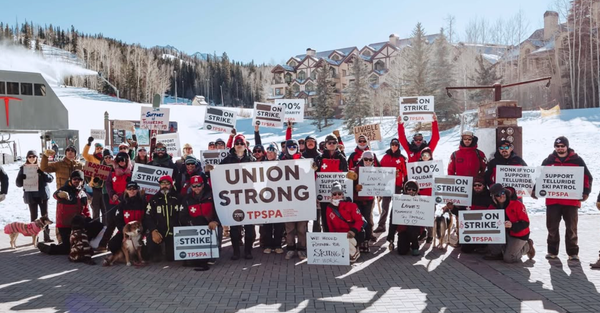
The Telluride Professional Ski Patrol Association, part of Communications Workers of America Local 7781, struck from December 27, 2025, through January 8, 2026. According to CWA, the resulting agreement also brought patrol supervisors into the bargaining unit after a federal labor board determination that they were eligible.
Neither the union nor the resort disclosed the contract’s financial terms to the Associated Press. The union acknowledged financial progress while expressing disappointment about unresolved wage-structure concerns. A resort representative described the outcome as a fair compromise.
A contract can improve workers’ position without settling every question about pay or the cost of staying in a mountain community. Telluride demonstrated the importance of a specialized workforce to the resort’s operations. It also showed why describing a settlement simply as a victory can leave out what workers still hope to change.
On the buses and in the grocery aisles
A quieter example is still shaping working conditions in the Roaring Fork Valley. In December 2024, the Roaring Fork Transportation Authority and Amalgamated Transit Union Local 1774 reached an agreement that averted a threatened strike. The contract runs from January 2025 through December 2027, making it part of the region’s current labor picture even though the negotiations occurred nearly two years ago. Among its provisions, the annual bonus for year-round bus operators who had reached the wage cap rose from $1,000 to $2,500.
During that dispute, drivers pointed to the area’s housing costs as a central problem. Their circumstances illustrate a particular tension in resort economies: the people transporting other workers to their jobs must also find a way to afford living within reach of their own.
Organized labor’s local presence also extends into everyday shopping. UFCW Local 7’s contract directory includes City Market bargaining units in Grand Junction, Clifton and Fruita, along with Safeway units in Grand Junction, Gunnison and Montrose. Those agreements are a reminder that western Colorado’s union story includes grocery workers as well as the more visible confrontations at destination resorts.
The numbers complicate the comeback story
Recent national reporting has highlighted union membership gains and the importance of state policy in determining where those gains occur. Colorado’s latest federal estimate is less encouraging for unions. The Bureau of Labor Statistics estimated that 161,000 Colorado wage and salary workers belonged to unions in 2025, or 5.9 percent. That compares with 206,000 and 7.7 percent in 2024. The national membership rate was 10 percent in 2025.
Those figures require caution. The 2025 estimates exclude October because of the federal government shutdown, so BLS says they are not strictly comparable with previous annual averages. State estimates also rely on relatively small samples. And Colorado’s statewide rate cannot establish a trend for the Western Slope specifically.
The defensible conclusion is narrower than either a sweeping comeback or a collapse: unions remain consequential in particular western Colorado workplaces, while the available statewide estimates do not demonstrate broad membership growth.
A major labor proposal stopped in Denver
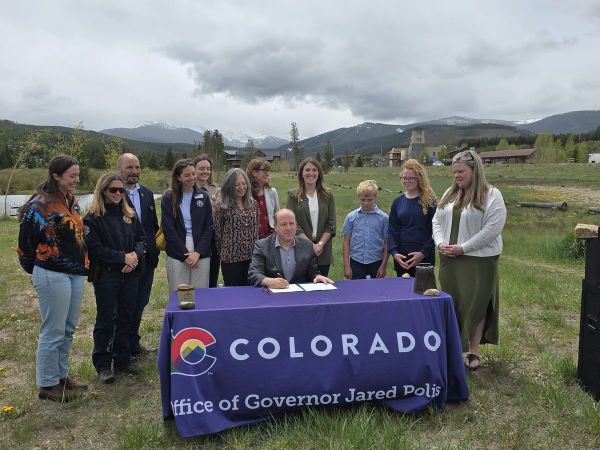
Organized labor also encountered a limit at the Capitol. Governor Jared Polis vetoed House Bill 26-1005, the Worker Protection Collective Bargaining bill, on May 28. The measure would have eliminated Colorado’s requirement for a second election before workers and employers could negotiate a union-security agreement addressing financial support for representation. It did not become law.
That second election is distinct from the initial decision to form a union. Supporters wanted to remove an additional hurdle in the bargaining process. SEIU Local 105 argued that the requirement weakens workers’ ability to build strong unions and negotiate better conditions.
For Western Slope workers, the result is that this proposed change to the rules governing union bargaining never took effect. Local contract successes occurred within a state legal framework that lawmakers tried, and failed, to change.
New protections reach beyond union workplaces
Other labor legislation did become law this year. A September roundup by State Futures and NYU’s Wagner Labor Initiative highlights several Colorado measures, including protections involving workplace temperatures and employers’ handling of identification documents. Those issues expand the labor discussion beyond union membership.
House Bill 26-1272 directs the state labor department to begin collecting data on temperature-related workplace injuries, illnesses and emergencies by January 15, 2027. It also requires a model prevention plan by July 1, 2028. The distinction is important for outdoor workers: the legislation establishes a timetable for data collection and prevention planning, rather than immediately imposing a universal new temperature standard.
Another enacted measure, House Bill 26-1283, generally prohibits employers and their agents from demanding, confiscating or retaining government-issued identification documents from workers and applicants, subject to exceptions. The law explicitly includes migrant and seasonal workers, making its scope relevant to the Western Slope’s agricultural workforce.
Together, these developments suggest what to watch after the holiday: how existing contracts translate into working conditions, whether new protections are implemented effectively, and whether workers can afford to remain in the communities their work supports. Telluride’s strike made that dependence briefly impossible to miss. The same questions continue on an ordinary workday, long after the picket signs come down.