Western Slope Schools Put Teacher Pay on the Ballot Alongside Proposition NN
Three Western Slope school districts are asking voters to fund staff raises this November. Proposition NN would also add school funding by reducing TABOR refunds. Here’s what District 51, Roaring Fork and Garfield Re-2 are requesting, what it could cost and how the separate ballot decisions compare.
In nine days in August, three Western Slope school boards voted to ask residents for more money, each citing staff pay. This November, voters in those districts will face a local property-tax request alongside Proposition NN, a statewide proposal to increase school funding by retaining money that would otherwise go toward TABOR refunds.
The proposals address some of the same concerns, but voters will decide each separately. A mill levy override raises local property taxes to pay for school operating costs beyond what the state funding formula provides. Proposition NN would change how much revenue the state can keep and direct additional funding to schools and programs serving children.
What the districts are requesting
District 51: $23.2 million, with raises the largest share
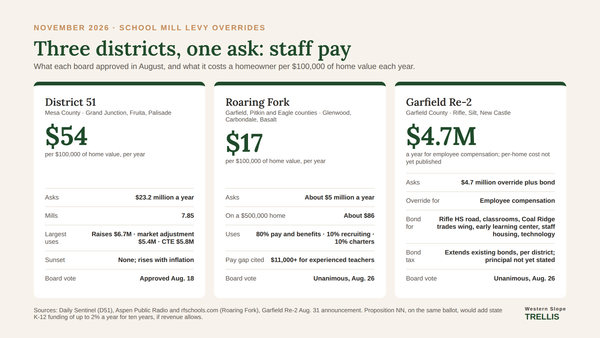
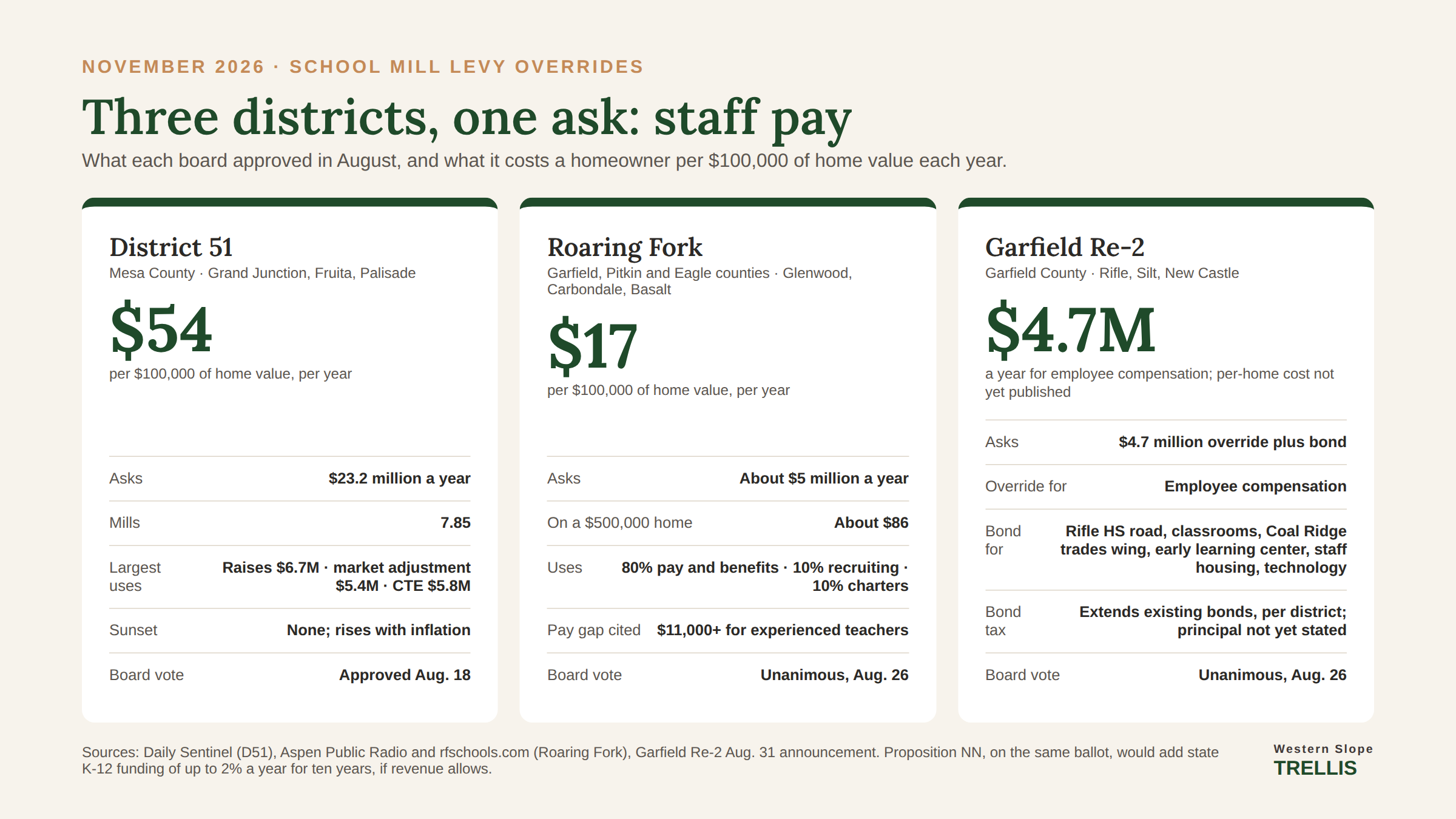
Mesa County Valley District 51 approved placing a $23.2 million mill levy override on the ballot on Aug. 18. The proposed 7.85 mills would cost about $54 annually per $100,000 of home value, or about $270 on a $500,000 home. The override would have no expiration date, and the amount raised would increase with inflation.
The largest allocations are $6.7 million for staff raises and $5.4 million for a 5% adjustment to bring teacher pay closer to comparable districts. Under the proposed teacher adjustment, the bottom of the salary schedule would rise from $50,765 to $53,303. The top would increase from $105,998 to $111,298.
Other funding would support career and technical education, safety, science and arts programs known as STEAM, and the charter schools’ share.
Roaring Fork: $5 million to help retain staff
Roaring Fork Schools voted unanimously Aug. 26 to put an override of about $5 million annually on the ballot. The estimated cost is about $86 a year on a $500,000 home. Eighty percent of the revenue would go to salaries and benefits.
The district’s pay comparisons help explain the request. It says experienced teachers earn more than $11,000 less than their peers in comparable districts, while average teacher pay trails by more than $5,500. Those gaps come as the district reports an 18% increase in the cost of living since 2023.
Garfield Re-2: Separate questions for pay and facilities
Garfield Re-2, which serves Rifle, Silt and New Castle, voted the same night to place two measures on the ballot. Its proposed $4.7 million annual override would fund employee compensation.
The bond proposal would pay for facilities and infrastructure, including improvements at Rifle and Coal Ridge high schools, an early learning center, staff housing in the three communities and technology upgrades. The district says the proposal would extend existing bonds rather than impose a new tax. Its announcement does not specify the bond’s principal amount.
Voters will decide the override and bond separately. The bond money could not be used for staff salaries.
What Proposition NN would change
Proposition NN would allow Colorado to retain additional revenue above its TABOR spending limit, with the additional capacity tied to state K-12 spending. It would establish an added school-funding component that can grow by up to 2% annually for ten years, depending on available revenue.
Districts could use that funding for teacher pay and retention, smaller classes, and career and technical courses. The measure also provides funding for services for students with disabilities, other school services and programs supporting children, including child care.
NN is the only statewide measure the Legislature referred to voters this year. It passed along party lines, 23–12 in the Senate and 42–21 in the House. Rep. Meghan Lukens of Steamboat Springs was a prime sponsor, and Rep. Elizabeth Velasco of Glenwood Springs was a sponsor. Sen. Janice Rich and Reps. Rick Taggart and Matt Soper voted against it.
What it would mean for refunds
The financial trade-off is a smaller TABOR refund when the state collects revenue above its existing limit. The amount would depend on state revenue, income and the refund rules that apply.
A draft Legislative Council analysis reported by Chalkbeat in July estimated a 2027 refund reduction of $28 for a single filer earning $100,000, or $56 for a joint filer. That is an example, rather than a fixed cost for every taxpayer or every year.
Opponents, including the Independence Institute, describe the loss of refunds as a tax increase by another name and argue that the state should fund schools within its existing cap.
Supporters have made teacher pay and classroom needs central to their campaign. After launching in Denver on July 17, the yes campaign held a Western Slope kickoff at Rocky Mountain Elementary in Clifton four days later. D51 Superintendent Brian Hill, board president Jose Luis Chávez and the teachers’ union president attended. At the time of that event, the D51 board had not taken a position.
Separate decisions, overlapping priorities
For residents of these districts, the distinction is where the money comes from and who controls its use. An override raises property taxes within the district for local schools. Proposition NN would retain state revenue and distribute funding under its statewide requirements. Voters can support either proposal, both or neither.
The three local requests put compensation at the center of this year’s school-funding debate. They also leave a practical question for voters: What would each district do if its override fails? The Western Slope Trellis voter guide will include any answers the districts publish.
Next in the series: hunting and fishing rights, conservation funding and wildfire prevention under Amendment 83 and Proposition 137.