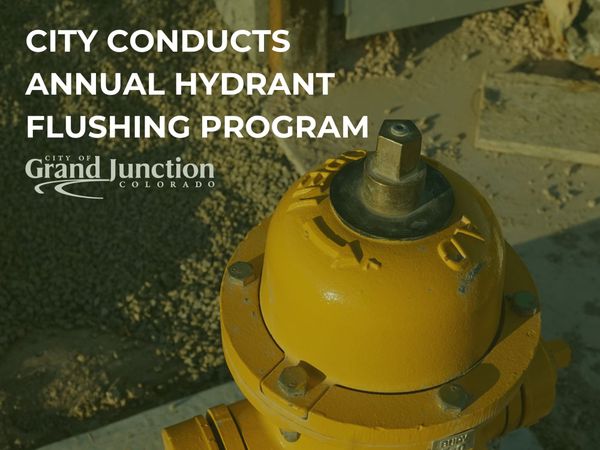
The City of Grand Junction will begin its annual spring hydrant flushing program on Monday, April 13, with work expected to continue for approximately two weeks.
This routine maintenance effort, conducted each year since 1993, plays a critical role in preparing the city’s water system for fire season while also supporting overall water quality for residents.
What the Hydrant Flushing Program Does
Hydrant flushing helps ensure that fire hydrants across the city are fully operational and capable of delivering adequate water pressure during emergencies. With more than 1,200 hydrants in the system, crews flush roughly half of them each spring as part of this rotating maintenance schedule.
This process also improves water quality by clearing out sediment buildup in pipes and reducing the risk of bacterial growth. By maintaining clean and consistent water flow, the City helps protect both public health and system reliability.
When and Where Work Will Take Place
Flushing will occur on weekdays from 7:30 a.m. to 3:30 p.m. across different areas of the city. Residents may see crews working near hydrants and notice water flowing into streets and gutters as part of the process.
Because the work rotates through neighborhoods, impacts will vary depending on location throughout the two-week period.
What Residents Should Expect
During hydrant flushing, some temporary changes to water service are normal. Residents may experience:
• Cloudy or discolored water
• Brief drops in water pressure
• Water pooling in streets or gutters near active flushing
These effects are short-lived and typically resolve quickly once flushing moves through the area. If discoloration occurs, residents are advised to run cold water for several minutes until it clears.
Supporting Fire Readiness and Water Quality
While the program may cause minor, temporary disruptions, it is an essential part of maintaining a safe and reliable water system.
By ensuring hydrants function properly and keeping water lines clean, the City of Grand Junction continues to invest in both emergency preparedness and long-term infrastructure health.
Residents are encouraged to plan accordingly during daytime hours and appreciate the importance of this annual effort as crews work across the community.