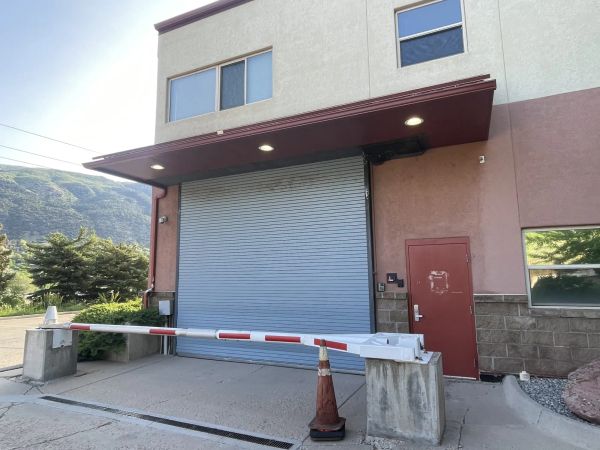
Glenwood Springs’ Planning and Zoning Commission voted 6-1 Tuesday night to revoke the Special Use Permit for the federal detention and processing facility at 100 Midland Avenue, marking a major local response to years of permit violations tied to detainee hold times.
The April 28 decision followed a public hearing where all public comment opposed the facility’s continued operation. The vote comes after city officials determined the site repeatedly exceeded the 12-hour detainee hold limit established when the permit was originally approved in 2003.
━━━━━━━━━━━━━━━━━━━━
Why the Permit Was Revoked
According to city officials, federal records obtained through Freedom of Information Act requests showed detainees were held longer than the permit’s 12-hour maximum at least 11 times between 2022 and 2025.
Those findings prompted Glenwood Springs to issue a Notice of Violation on March 23, 2026.
Under Section 070.010.080(e)(2) of Glenwood Springs Municipal Code, the Planning and Zoning Commission can revoke permits when approved conditions are violated. Commissioners ultimately determined that the facility’s operational history met that standard.
The site is leased by the U.S. General Services Administration and operated by U.S. Immigration and Customs Enforcement (ICE) and Homeland Security Investigations (HSI).
A Symbolic Vote With Uncertain Practical Impact
Despite the revocation, city officials acknowledged federal agencies are typically not required to comply with local zoning laws in the same way private entities are.
That means Glenwood Springs may have limited legal authority to force operational changes, even after revoking the permit.
At this stage, it remains unclear whether ICE, HSI, or the GSA will alter operations in response.
This legal gray area was central to city staff’s recommendation.
City Staff Recommended Corrective Measures Instead
Rather than revocation, city staff recommended requiring corrective actions such as quarterly reporting on detainee numbers and hold times.
Officials argued this approach could preserve cooperation with federal agencies while maintaining oversight of safety and compliance.
The concern was that revocation, while a stronger public statement, could reduce the city’s practical ability to influence federal operators.
Still, commissioners chose revocation after weighing public opposition and the documented permit violations.
“We are committed to following our local land use process and enforcing our building and zoning laws to the fullest extent allowed,” said City Manager Steve Boyd. “The community clearly cares about this issue, and we take that seriously. Our priority is always the health, safety, and welfare of our residents.”
Safety Issues Addressed, Operational Questions Remain
City officials noted the facility was recently brought into building compliance.
After inspections by the Fire Marshal and Building Official on April 9, the lower unit was confirmed compliant as a Group I-3 detention occupancy, while the upper unit was approved for Group B business occupancy.
The city also discovered the facility had never received a final certificate of occupancy after opening under a temporary certificate in 2004. That final certificate was issued this month after inspections and corrections.
This distinction is important: current enforcement concerns are centered less on physical safety and more on whether federal operators followed the permit’s original conditions.
A Broader Debate Over Local Control
The Glenwood Springs vote underscores a growing tension seen in communities across the country: how much authority local governments truly have when federal agencies operate facilities within city boundaries.
For many residents, Tuesday’s hearing became a referendum not just on zoning compliance, but on transparency, accountability, and community voice.
While the long-term legal consequences remain uncertain, the Planning and Zoning Commission’s decision sends a clear signal that local officials are willing to formally challenge federal operations when permit conditions are not met.
What Happens Next
The city says it has not received substantive responses from federal agencies or the property owner regarding the hold-time violations.
Whether the revocation changes operations at 100 Midland Avenue remains to be seen.
For now, the vote represents one of the strongest actions available to Glenwood Springs under local law, even as broader federal authority may ultimately determine what happens next.