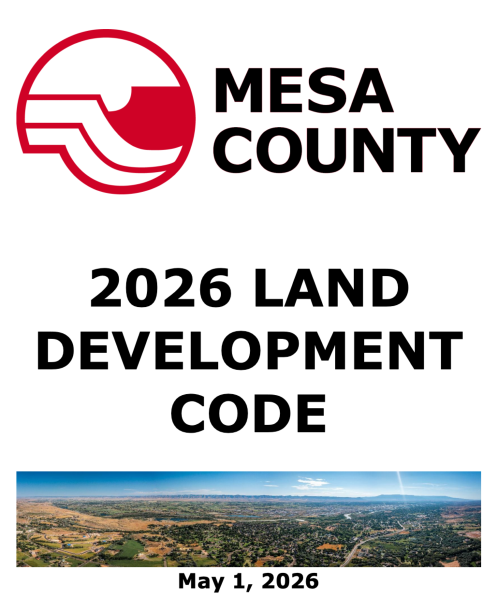
Mesa County is currently finalizing its 2026 Land Development Code (LDC) update, a massive policy shift that governs how land is used and built upon across the unincorporated valley. Key changes include the "by right" legalization of tiny homes, the transition of public notices from newspapers to digital portals, and the adoption of state mandated wildfire and electric vehicle infrastructure standards. This guide breaks down the technical shifts and the potential impact on neighborhood transparency and housing affordability.
The Digital Shift: A New Era for Public Notices
One of the most significant changes in the 2026 code is how you receive information about nearby development. Following a broader national trend, Mesa County is moving its legal public notices away from local newspapers and onto a centralized digital hub on the official county website.
While proponents argue this saves taxpayer money and modernizes disclosure, independent research on similar shifts in states like Florida suggests it can lead to a 14 to 18 percent decline in public meeting attendance. For residents, this means the burden of "staying informed" has officially shifted from incidental discovery in the paper to active monitoring of government portals.
Housing Flexibility: Tiny Homes and ADUs
To address the 2026 housing shortage, the updated code introduces more flexible residential options.
- Tiny Homes: These are now allowed "by right" in several zoning districts, meaning owners do not need special conditional use permits if they meet basic building standards.
- Habitable Standards: Tiny homes must be a minimum of 70 square feet for habitable rooms and can be built on-site or prefabricated, provided they have a permanent foundation and meet site-specific weather requirements.
- Accessory Dwellings (ADUs): In alignment with Colorado HB24-1152, the county has simplified the standards for secondary "mother-in-law" suites to increase density without requiring major infrastructure expansions.
Safety and Modernization: Wildfire and EV Standards
The 2026 code incorporates two major state mandates designed for long-term resilience:
- Wildfire Resiliency: Starting in 2026, new construction in designated Wildland-Urban Interface (WUI) zones must adhere to the Colorado Wildfire Resiliency Code. This includes mandatory fire-resistant materials like Class A roof coverings and noncombustible siding to harden structures against embers.
- Electric Vehicle (EV) Readiness: In accordance with state law, the county is streamlining the permitting process for EV charging stations. This includes consistent land use standards that make it faster and cheaper for businesses and multi-family units to install charging infrastructure.
Density Calibration: Industrial vs. Residential
The county is also "cleaning up" its zoning map to reduce conflict between neighbors.
- Residential Density: Standards are increasing in specific zones to allow for more efficient growth.
- Industrial Protection: Conversely, residential density is being removed from industrial zones to prevent "nuisance" conflicts between homes and heavy business operations.
Your Voice, Your Valley: How to Review the 2026 Code Draft
The 2026 Land Development Code isn't just a technical document; it is the rulebook for the future of our neighborhoods. Because these changes impact everything from your neighbor’s ability to build a tiny home to how you receive emergency wildfire notices, it is critical that you review the proposal firsthand.
Mesa County has made the full draft and a simplified summary available for public inspection:
Mark Your Calendars: Critical Hearing Dates
Public hearings are the most direct way to voice your support or concerns before the code is finalized.
- Planning Commission Hearing: Thursday, May 21, 2026
- Board of County Commissioners Hearing: Tuesday, June 16, 2026
You don’t have to wait for the hearings to be heard. You can submit written comments directly to the Community Development department.