Garfield County is escalating its dispute with the City of Glenwood Springs over the South Bridge project, setting up a legal fight over who gets to review one of the region’s most significant transportation proposals.
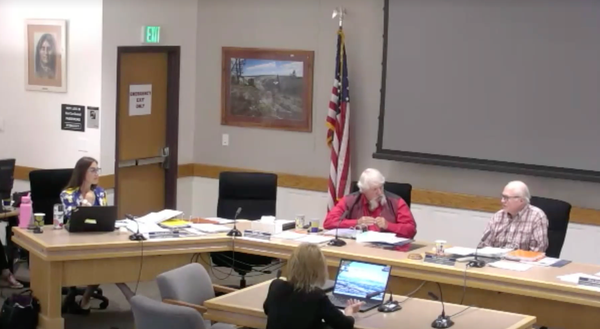
At their June 15 regular meeting, Garfield County Commissioners voted unanimously to direct staff to file a request for declaratory judgment and a motion for preliminary injunction in Garfield County District Court against the City of Glenwood Springs.
The dispute centers on whether the South Bridge project must go through Garfield County’s 1041 land-use review process before construction can move forward on county land.
What Is South Bridge?
South Bridge is an estimated $80 million bridge project intended to provide traffic relief and improve emergency access south of Glenwood Springs.
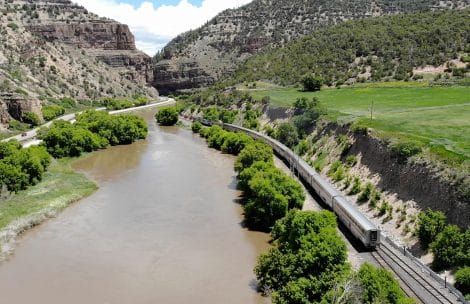
The project would cross the Roaring Fork River and Jackson Ranch before connecting with Highway 82. Both the river crossing and Jackson Ranch are located in unincorporated Garfield County.
That geography is at the heart of the disagreement.
Garfield County officials argue that because the most expensive and physically significant portion of the project crosses county land, Glenwood Springs must submit a 1041 application.
Glenwood Springs has maintained that the project only requires a Location and Extent review, and that the county does not have 1041 jurisdiction under state law.
What Is a 1041 Review?
A 1041 review is a Colorado land-use process that gives local governments oversight over certain activities of statewide concern.
In practice, it can allow a county to review major projects that affect land, water, transportation, hazards, or other significant local and regional interests.
For Garfield County, the issue is not simply whether South Bridge is a good idea. It is whether the county has legal authority to review the parts of the project that would be built outside Glenwood Springs city limits.
The county’s legal filing asks the court to settle which process applies.
It also seeks to prohibit construction within unincorporated Garfield County until that question is resolved.
County Says Application Was Incomplete
County Attorney Heather Beattie told commissioners that the county also determined Glenwood Springs’ Location and Extent application was incomplete.
One issue cited by the county is that part of the project crosses Jackson Ranch, which carries a conservation easement held by Aspen Valley Land Trust.
According to the county, the trust’s consent has not been obtained.
That adds another layer to the dispute. Beyond the question of city versus county review authority, county officials are also raising concerns about whether the project has addressed all property and land-use requirements tied to the route.
Discussions Date Back to 2025
County and city officials have been discussing the 1041 issue since at least October 2025.
According to the county, Glenwood Springs representatives had previously indicated they would file a 1041 application. No such application was ultimately submitted.
That history appears to have contributed to commissioners’ decision to move the issue into court.
As of mid-week, the city had not yet been formally served, and the court filing had not yet been accepted for record.
Traffic Relief, Emergency Access, and Legal Process
South Bridge has long been discussed as a way to relieve traffic pressure and improve secondary access in and out of parts of Glenwood Springs.
Emergency access is one of the project’s important potential benefits, especially in a region where wildfire, crashes, congestion, and limited routes can create serious evacuation and response concerns.
But public records and regional reporting describe South Bridge primarily as a traffic relief bridge, with evacuation capacity as an additional benefit.
That distinction matters because major infrastructure projects can be framed in different ways depending on the audience. For residents, the project may be about traffic congestion, emergency routes, neighborhood impacts, land preservation, or the relationship between city and county authority.
The lawsuit does not appear to decide whether South Bridge should be built. Instead, it asks which government process must be followed before construction can proceed in unincorporated Garfield County.
Why the Dispute Matters
The South Bridge conflict is one of the most consequential local government disputes on the Western Slope this week because it touches several issues at once.
It is about transportation planning in a growing and constrained valley.
It is about emergency access in a region where limited routes can become a public safety concern.
It is about conservation land and whether the project has secured the consent needed to cross property with an existing easement.
And it is about the balance of authority between a city building a major project and a county responsible for land-use review outside city limits.
If the court agrees with Garfield County, Glenwood Springs may have to go through the county’s 1041 process before moving forward on county land. If the court agrees with Glenwood Springs, the city’s Location and Extent review path may be enough.
Either outcome could shape how future regional infrastructure projects are reviewed when they cross jurisdictional boundaries.
Garfield County Also Looks at Special Tax Districts
In a separate budget-related discussion, Garfield County Commissioners reviewed fiscal modeling for possible Special Tax Districts.
The idea is to create dedicated funding streams for early childhood care facilities and senior citizen programs.
Commissioners are looking for ways to protect those services from general fund pressure as the county prepares for what could be a tight 2027 budget cycle.
No final decision was made, but the discussion suggests the county is exploring ways to preserve core community services before budget constraints become more severe.
The Bigger Picture
The South Bridge dispute now moves into legal territory. The outcome could shape how cities and counties handle major infrastructure projects that cross jurisdictional lines, especially when transportation, emergency access, and conservation land are involved.