What Does Every Grand Junction Neighborhood Need to Help You Live to 80?
A new research framework asks a simple question: what does every neighborhood need to support a long, healthy life? In Grand Junction, the answer may reveal gaps in housing, transportation, environment, and community connection—and where local investment could make the biggest impact.
A new research framework called Universal Basic Neighborhoods asks which structural ingredients make a long, healthy life possible - and whether every community gets them equally.
Mesa County's average life expectancy is 78.8 years. For men here, it's 76.4. Colorado overall averages 80.2 years. That gap is not accidental, and it's not simply a matter of individual choices. Where you live - the neighborhood itself, its air, its streets, its social fabric - has a measurable effect on how long you live.
A peer-reviewed study led by Dr. Michael O. Emerson at Rice University puts a name and a framework to that reality. He calls it Universal Basic Neighborhoods, or UBN. The idea is straightforward: rather than focusing only on whether individuals make healthy choices, it asks what structural conditions every neighborhood needs so that its residents can thrive. The threshold the researchers use is a community life expectancy of 80 or more years. By that standard, Mesa County is close - but not there yet.
The research identified four domains and 35 measurable factors that distinguish neighborhoods where people live long, well lives from those where they don't. And it makes one argument plainly: "universal" means every neighborhood. Air pollution and social decline do not stay politely within their designated zip codes. What happens in one part of a city ripples outward to the rest.
So what would a Universal Basic Neighborhood look like in Grand Junction?
The Four Domains
Emerson's framework organizes neighborhood health into four areas: physical environment, housing and context, social environment, and transportation. Each carries its own set of measurable indicators. The researchers tested the framework in two Louisville, Kentucky neighborhoods - the well-resourced Crescent Hill and the historically disinvested Russell - to show how the same set of metrics tells very different stories depending on where you look.
They also developed model legislation connecting UBN principles to zoning and neighborhood planning, making the case that local policy is the lever that can actually move these numbers.
Grand Junction is not Louisville. But the four domains translate directly to questions we can ask about our own streets, subdivisions, and community institutions.
Transportation: Getting Around Without a Car is Still a Challenge
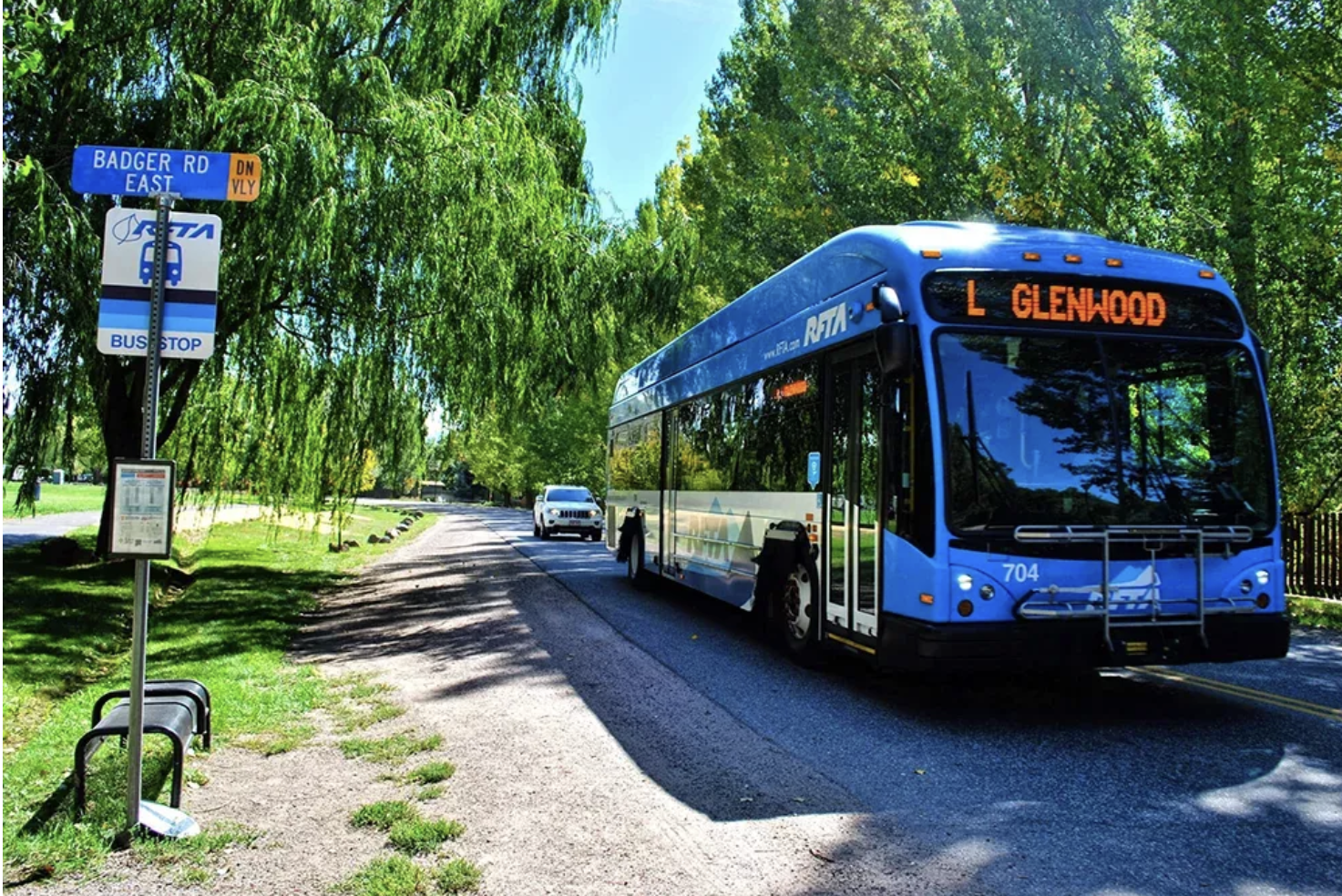
Grand Valley Transit is Mesa County's public bus system. It runs 12 fixed routes connecting Grand Junction, Fruita, and Palisade, with a one-way fare of $1.50. At the Downtown Transfer Facility, GVT connects with Bustang and Outrider for regional travel. For what it is, GVT works.
But Grand Junction remains a car-dependent city by design. Highway 50 and the North Avenue corridor carry high traffic volumes and have documented safety concerns for pedestrians and cyclists. For residents of Orchard Mesa or Lincoln Park who do not own a car or cannot drive - older adults, people with disabilities, lower-income households - transit options are limited in ways that affect access to jobs, medical appointments, groceries, and social connection.
Emerson's framework does acknowledge rural and semi-rural realities. Vehicle access per household is itself one of the 35 factors, and in a region like Western Colorado, owning a car remains a practical necessity for most. The UBN question is not whether everyone should be car-free. It's whether the absence of alternatives is leaving some residents behind - and whether road design and transit investment reflect all the people who live here.
Housing: Investment Is Happening, but Is It Reaching Every Neighborhood?
The City of Grand Junction has committed $19 million in housing funding from 2022 to 2024, leveraging $62 million in community investment. That has produced 102 affordable units built and 500 more in the pipeline. The City of Grand Junction's housing programs are coordinating across nine city and county workgroups focused on unhoused strategy.
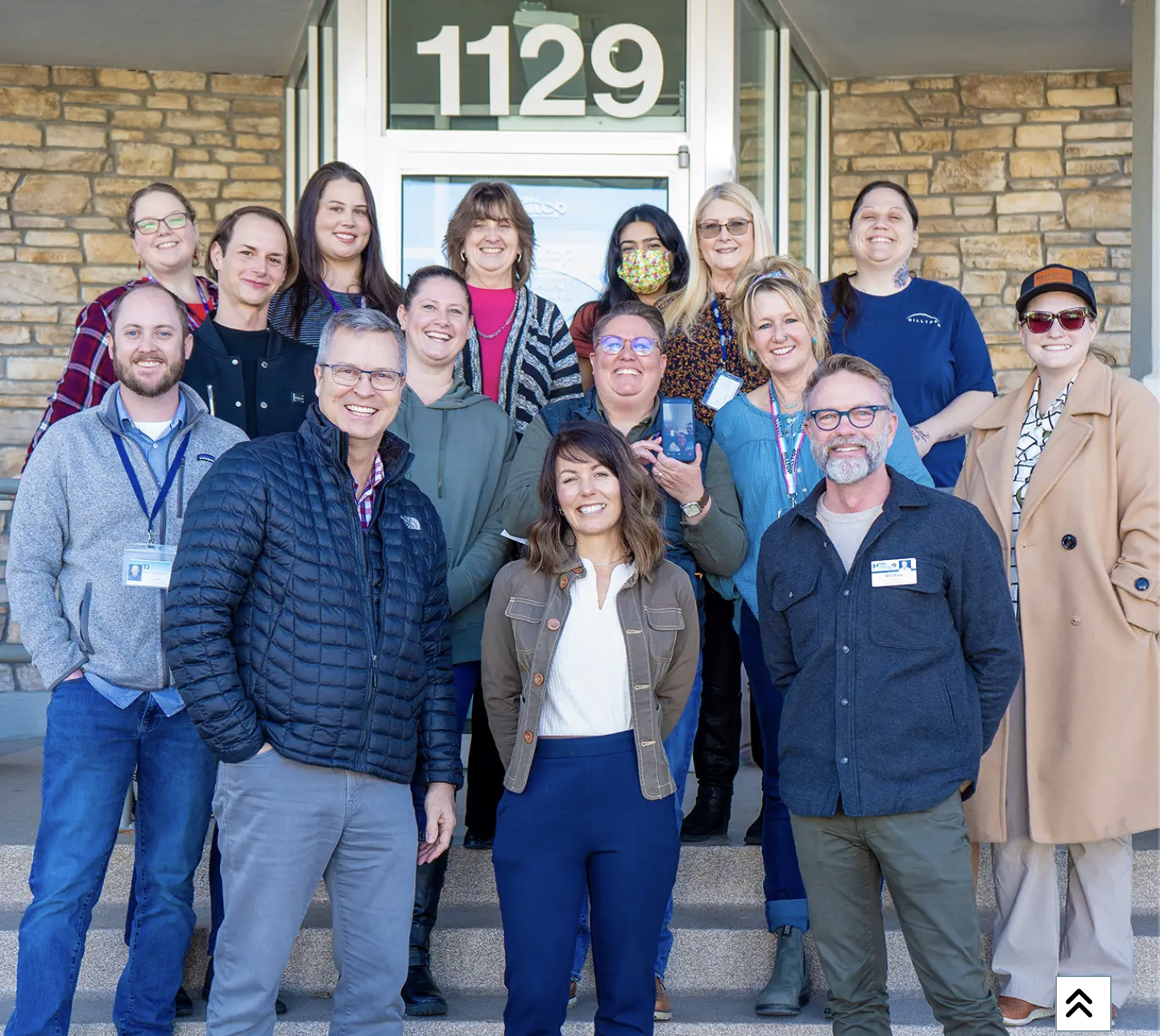
The Grand Junction Housing Authority administers 184 Veterans Affairs Supportive Housing vouchers for homeless veterans, along with Section 8 housing choice vouchers. Hilltop Community Resources provides homelessness prevention, rapid rehousing, and street outreach across Mesa, Delta, Montrose, and Ouray counties.
These are real commitments. The UBN framework pushes us to ask a harder question: is this investment distributed across all neighborhoods, or concentrated in a few? Are the areas with the oldest housing stock, the highest density of rental units, and the most overcrowded conditions getting proportional attention? A city can build 500 units and still leave its most stressed neighborhoods behind if the investment is not mapped against where the need actually lives.
Physical Environment: Air Quality and Green Space Are Not Equally Shared
Grand Junction's outdoor recreation reputation is well-earned. But within the city, access to parks and green space is not uniform. Lincoln Park, Orchard Mesa, and Clifton do not have the same relationship to open space that the Redlands or Tiara Rado enjoy. That asymmetry is not incidental - it's one of the 35 UBN factors.
Air quality is the other piece. Local monitoring data and community discussions have flagged growing particulate concerns and questions about volatile organic compounds from oil and gas activity in the region. Western Colorado Alliance has been active on clean energy and environmental monitoring. Great Outdoors Colorado has made an explicit equity commitment around ensuring underserved communities have meaningful access to nature and outdoor spaces.
The physical environment domain in UBN is not just about beautiful scenery. It's about whether the air in your neighborhood is safe to breathe, and whether there is accessible green space within a reasonable distance of your front door. On both counts, Grand Junction has work to do in some neighborhoods that a broader life expectancy data point will not reveal on its own.
Social Environment: Connection, Culture, and a Suicide Rate That Demands Attention
Mesa County's suicide rate is 32.1 per 100,000 residents - more than double the national rate, according to the Mesa County Community Health Needs Assessment. Social isolation is a documented and serious public health problem here.
That number sits heavily against the social environment domain of UBN, which looks at social connection, cultural amenities, and the density of community institutions. The good news is that Mesa County has organizations doing this work with intention.
Hilltop Community Resources has operated for more than 75 years with a stated mission of creating connection so that everyone belongs. STRiVE Colorado provides community-based services for people with disabilities. The Western Colorado Community Foundation runs a Community Resource Center that supports the broader nonprofit ecosystem. The Hispanic Affairs Project builds cultural community and economic belonging for Latino residents.
These organizations are not background noise. In the UBN framework, they are infrastructure. The question is whether their reach is sufficient, equitably distributed, and resourced at the scale the data suggests is needed.
What Would a Universal Basic Neighborhood Look Like in Grand Junction?
Imagine applying all 35 metrics from the Emerson framework to, say, Lincoln Park versus the Redlands. Or to the neighborhoods along the North Avenue corridor versus those west of downtown. The research methodology allows exactly this kind of side-by-side analysis. It would show, in concrete terms, which neighborhoods are already near or above the 80-year life expectancy threshold - and which have structural gaps in transportation access, housing stability, environmental quality, or social connection.
No one has done that analysis for Grand Junction yet.
The model legislation component of the UBN research points to what comes next: connecting those findings to zoning decisions, capital investment priorities, and the planning processes that shape neighborhoods over decades. That is not a small project. But it is a tractable one, and it starts with agreeing that every neighborhood in this city deserves the conditions that make a long, healthy life possible.
Help Build This Conversation Locally
Western Slope Trellis is building a directory of community organizations, civic leaders, and local institutions across the Western Slope. If we were to bring the UBN framework to Grand Junction seriously, who would need to be at the table?
We want to hear from you. Which organizations, leaders, or community voices do you think should be part of this conversation? Are there neighborhoods in Grand Junction you think are already close to meeting the UBN threshold? Are there areas you believe have significant gaps in one or more domains?
This is the kind of question that benefits from local knowledge - the kind that does not appear in any dataset. Reach out and tell us who belongs in this conversation.
About the Research
The Universal Basic Neighborhoods framework was developed by Dr. Michael O. Emerson and colleagues at Rice University and published as a peer-reviewed study. An accessible overview and interview with Emerson was published by Streetsblog USA. Mesa County life expectancy and suicide rate data cited in this article come from the Mesa County Community Health Needs Assessment, available through Mesa County Public Health.
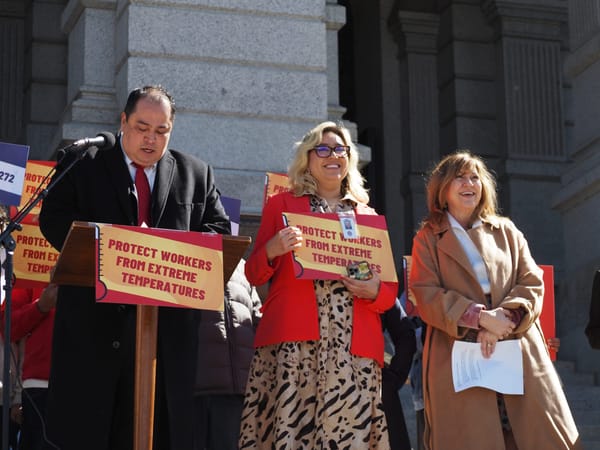
Alex Sanchez (left), Rep. Elizabeth Velasco (center) and Sen. Lisa Cutter (right) spoke at a press conference for a worker protection bill at the Colorado Capitol on March 11, 2026. (Photo by Sara Wilson/Colorado Newsline)