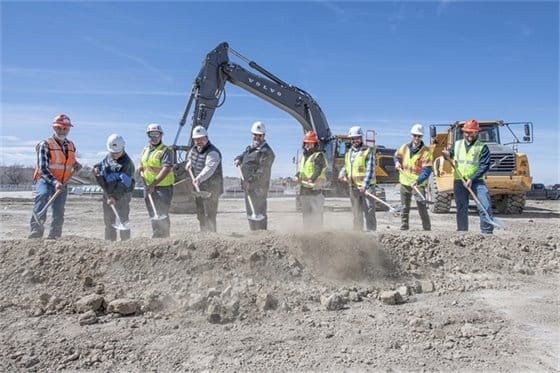
The City of Montrose has officially begun construction on a major upgrade to its wastewater treatment plant, launching a roughly $30 million infrastructure project designed to modernize aging systems and prepare the facility for future water quality regulations.
City officials marked the milestone with a groundbreaking ceremony on Monday. The plant, which was originally commissioned in 1984 and expanded in 2009, currently operates with a permitted treatment capacity of 4.32 million gallons per day. While the facility is still functioning within its hydraulic limits, city leaders say aging infrastructure and anticipated changes to state nutrient regulations prompted the decision to upgrade key systems now rather than wait for new requirements to take effect.
“For more than four decades, the City of Montrose’s Wastewater Treatment Plant has operated continuously, protecting public health and supporting the community’s growth,” said City Manager Bill Bell. “Nearly every household and business, from restaurants to manufacturers, depends on this infrastructure every day. These improvements represent an important investment in maintaining the reliability and performance of this essential plant.”
Preparing for Future Water Quality Standards
A central goal of the project is to strengthen the plant’s ability to remove nutrients such as phosphorus from wastewater. Colorado regulators are expected to impose tighter nutrient limits under Regulation 85, which governs nutrient management in state waters.
To meet those anticipated standards, the project will add a new anaerobic treatment basin designed to support biological phosphorus removal. City officials say building the system now will allow the facility to comply more easily when new regulatory limits are implemented.
Major System Upgrades Planned
Beyond nutrient removal, the project includes a series of upgrades aimed at improving operational reliability and long-term performance. Planned improvements include:
• Construction of a new anaerobic basin for phosphorus removal
• Replacement of aging influent screw pumps with modern submersible pumps
• Upgrades to sludge pumping systems to improve process control
• Replacement of oxidation ditch rotor aerators to maintain treatment performance
• Installation of a new self-cleaning UV disinfection system that reduces energy use
• Addition of a higher-capacity emergency standby generator to improve resilience during power outages
Together, these improvements are intended to extend the life of the plant while ensuring it continues to meet environmental standards and community needs.
Construction Timeline and Delivery Method
Design work on the project began in January 2025, with construction now underway. The city expects the project to be completed in fall 2027.
The work is being delivered through a progressive design-build approach, a project delivery method that allows designers and contractors to collaborate closely from the earliest stages of planning. The project team includes engineering firm Burns & McDonnell and Moltz Construction.
“We are proud to support the City of Montrose in delivering these important improvements to its wastewater treatment plant,” said Brian Knadle, operations director for Burns & McDonnell in the Mountain Region. “By using a progressive design-build approach, the team has been able to collaborate early to streamline decision-making and advance critical upgrades efficiently.”
Brent Topper, project manager for Moltz Construction, emphasized the challenge of upgrading a facility that must remain operational throughout construction.
“Our team understands the importance of keeping this facility fully operational while upgrading critical systems,” Topper said. “We are committed to a collaborative approach that maintains reliability for the community throughout construction.”
Funded by User Fees
The project is being financed through revenue bonds, which will be repaid through wastewater system user fees rather than new taxes. City officials say this financing structure allows Montrose to make long-term infrastructure investments while spreading costs across the system’s users over time.
With the upgrades now underway, city leaders say the improvements will help ensure the wastewater plant continues to protect public health, support economic activity, and meet environmental standards for decades to come.
For video about the project: Click here