Apr 15 Montrose Forum Breaks Down Property Tax Changes, What’s Driving Increases, and What Comes Next
Montrose officials broke down recent property tax changes at a community forum, explaining why bills are rising and what new relief measures are coming. The discussion highlighted how state policy shifts and local growth are reshaping how property taxes are calculated.
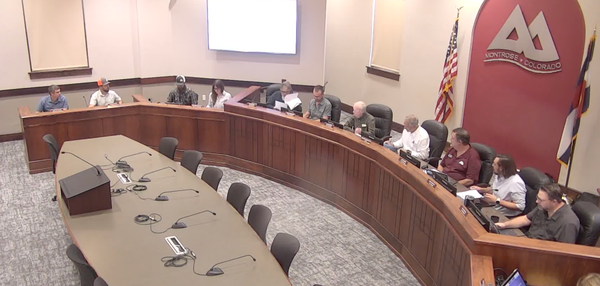
A recent Montrose Forum brought together county officials to walk residents through one of the most complex and widely discussed topics in the region right now: property taxes.
Montrose County Assessor Brad Hughes and Treasurer Rosemary Murphy led the discussion, offering a detailed look at how property taxes are calculated, what has changed in recent years, and why many residents are seeing higher tax bills.
Why Property Taxes Changed So Dramatically
At the center of the conversation was a wave of recent changes at the state level. Hughes explained that the Colorado legislature made major adjustments to property tax policy following sharp increases in home values across the state.
In Montrose County, residential property values rose significantly during the 2023 reassessment cycle, with median increases around 47 percent over a two-year period. Without intervention, that would have led to equally large increases in property tax bills.
In response, lawmakers reduced assessment rates, introduced temporary value exemptions, and added new limits on how quickly tax revenues can grow.
How Property Taxes Are Calculated
Hughes walked through the basics of how property taxes work, emphasizing that the system is built on three main components:
Property value, determined by the assessor
Assessment rate, set by the state
Mill levy, set by local taxing districts
Those three pieces combine to determine a final tax bill.
One key point: the assessor does not set tax rates or budgets. Local governments, school districts, and other taxing entities determine how much revenue they need, and the tax rate adjusts accordingly.
A More Complicated System Going Forward
One of the biggest changes residents are now seeing is a more complex tax formula.
Instead of a single residential assessment rate, the state has introduced a split system. Property owners now pay one rate for schools and another for all other local governments.
This change was designed to provide some tax relief while ensuring school funding remains stable, since a significant portion of school budgets is backed by the state.
The result is a system that requires multiple calculations instead of one, making tax bills harder for residents to easily understand.
Why Tax Bills Increased in 2025
Many residents have asked why their taxes increased this year even though property values did not spike as dramatically as before.
Hughes pointed to a key factor: the expiration of a temporary $55,000 value exemption that had been applied to residential properties in prior years.
When that exemption was removed, taxable values effectively increased overnight, leading to higher bills even without major changes in market value.
For some homeowners, especially those with lower-value properties, that change represented a significant percentage increase.
What to Expect Next: New Adjustments in 2026
Looking ahead, the state is introducing a new form of tax relief.
Starting in the current tax year, homeowners will receive a reduction equal to 10 percent of the first $700,000 of their home’s value for local government taxes. This does not apply to the school portion of the tax bill.
That means a $500,000 home would see a $50,000 reduction in taxable value for local taxes, while a $700,000 home would receive the full $70,000 adjustment.
This adjustment is expected to continue in future years, with thresholds adjusted for inflation.
Where Your Tax Dollars Go
Treasurer Rosemary Murphy provided a breakdown of how property tax revenue is collected and distributed.
In 2026, Montrose County is expected to collect approximately $70.6 million in property taxes and related assessments. Of that:
About $28.7 million will go to local schools
$19.5 million will go to county government services
$22.4 million will be distributed among other districts, including fire, library, and special districts
Murphy emphasized that the treasurer’s office does not set taxes but is responsible for collecting and distributing funds according to state law.
Important Deadlines for Property Owners
Residents were also reminded of key property tax deadlines:
First half payments are due by February 28
Full payments are due by April 30
Second half payments are due by June 15
Delinquent properties are subject to interest, public notice, and eventual tax lien sales if unpaid.
Programs That May Help Residents
Officials highlighted several programs that may help residents manage rising tax costs:
A senior property tax exemption, which reduces taxable value for qualifying homeowners
A tax deferral program, where the state pays property taxes upfront and places a lien to be repaid later
However, the future of some programs remains uncertain due to a projected state budget shortfall.
A System Still Evolving
The forum made clear that Colorado’s property tax system is in a period of rapid change.
Hughes noted that many of the recent adjustments were driven by the need to balance taxpayer relief with maintaining funding for local governments and schools. At the same time, he acknowledged the system has become more complicated and harder for residents to navigate.
For many in attendance, the takeaway was not just how taxes are calculated, but how closely local budgets, state policy, and property values are all connected.
Watch the Full Forum
For a deeper look at the discussion, including detailed examples and audience questions, the full Montrose Forum presentation is available below.