Every Tuesday in downtown Grand Junction, a central community space transforms into a bustling gathering point where neighbors pick up groceries, connect with local organizations, and spend time with people they might not otherwise meet.

The weekly event, organized by Mutual Aid Partners (MAP), has become a cornerstone of grassroots support in the Grand Valley. What looks at first like a small outdoor market is part of a broader effort to strengthen community relationships while helping residents access essential resources.

For founder Stephania Vasconez, the goal of the organization extends beyond distributing food or supplies.

“I’d say our biggest goal is community building,” Vasconez said. “Bringing together community members of different backgrounds, socioeconomic groups, political beliefs, and religions. At the end of the day, we’re all human beings and we all have the same needs.”


A Weekly Community “DISTRO”

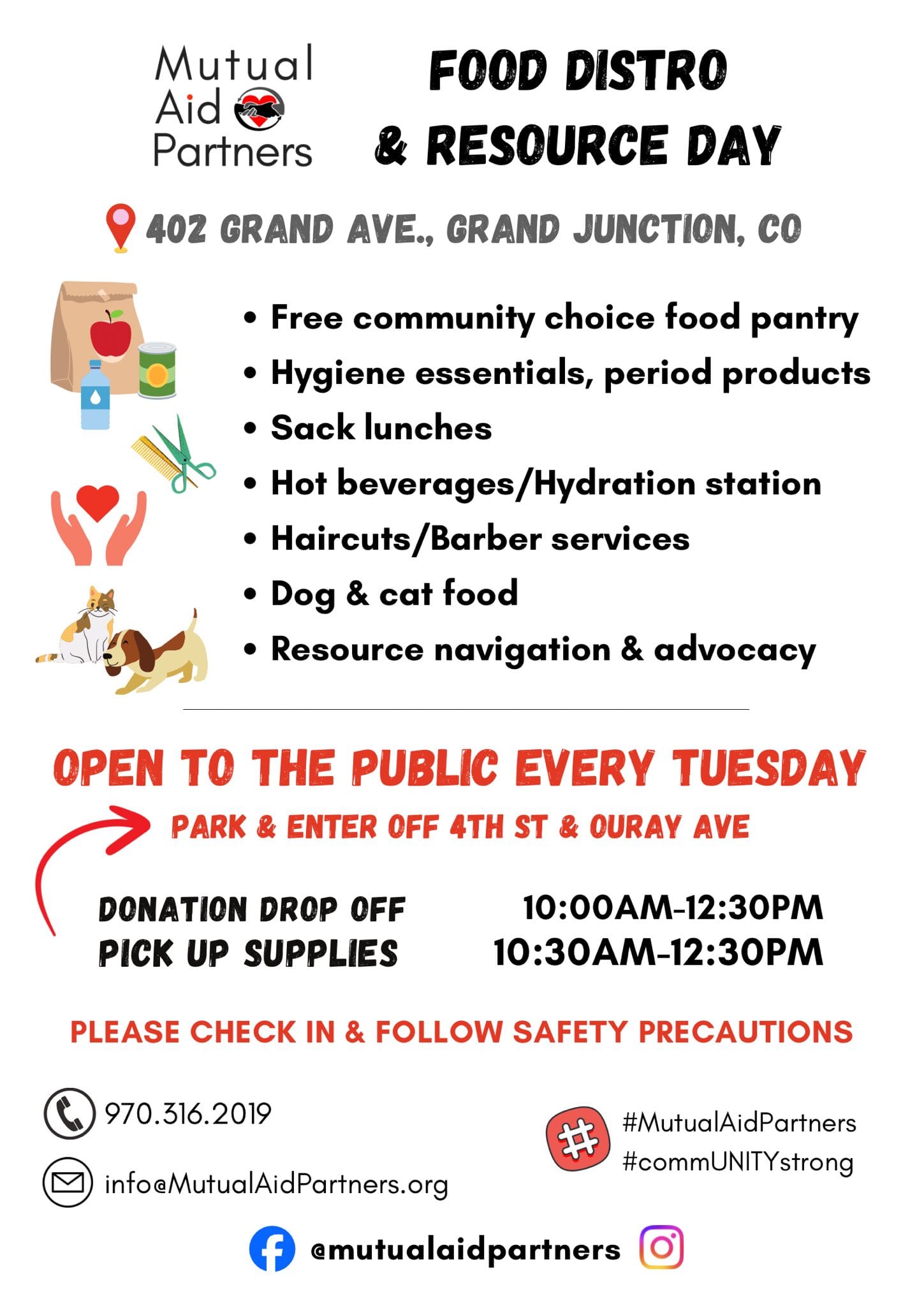
The heart of Mutual Aid Partners’ work is its MAP Weekly Distro, held every Tuesday in downtown Grand Junction.

Volunteers transform the space into what organizers describe as a farmer’s market–style distribution event, where community members can freely choose the food and supplies they need.

Rather than handing out prepacked boxes, the event emphasizes choice-based distribution. Participants browse tables stocked with fresh produce, frozen meats, rescued food, and shelf-stable groceries.

Essential supplies are also available, including hygiene items, period products, sack lunches, and hot beverages.

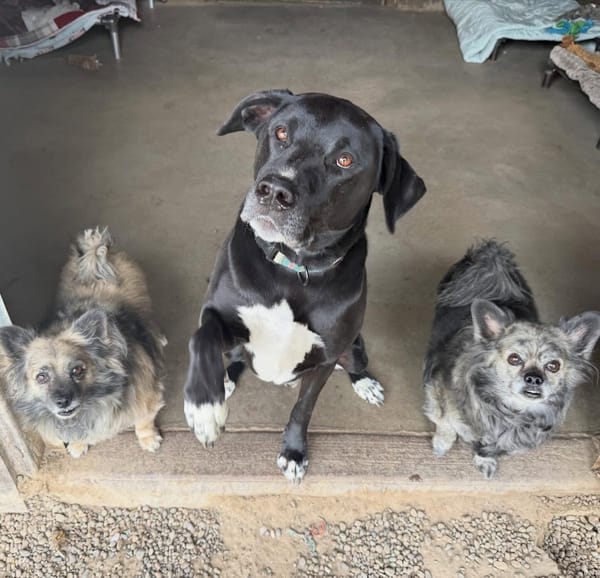
The weekly event also supports pets in the community. Organizations such as Barkley’s Hope, CO Pet Pantry, and Roice-Hurst Humane Society regularly provide free dog and cat vaccinations and donated pet food.

Each week requires roughly 30 volunteers to operate, helping with setup, food distribution, and resource navigation.


Connecting Residents With Services

Alongside the food distribution, MAP brings together a rotating network of community partners that provide guidance and referrals for people navigating health and human services systems.

Resource navigators assist with applications, connect residents with available programs, and help people understand what services may be available to them.

Regular partners include organizations such as:

Depending on the week, participants may also receive support related to pediatric and family health, housing resources, harm reduction services, or other community programs.

The goal is to meet immediate needs while also helping people navigate longer-term support systems.

“We make sure we’re collaborating with other community organizations so those resources are accessible,” Vasconez said. “It’s not just food. It’s about helping people understand what support is available.”


A Grassroots Effort That Grew During the Pandemic

Mutual Aid Partners was formed during the early months of the COVID-19 pandemic, when many community services were limited or closed.

At the same time, residents across the country were organizing informal mutual aid networks to support neighbors experiencing sudden hardship.

The idea of mutual aid itself is much older. The practice of communities sharing resources and supporting one another has existed for centuries in many cultures.

During the pandemic, however, the model gained renewed visibility as volunteers stepped in to fill gaps in existing systems.

“There was this moment where people were being told to stay inside,” Vasconez said. “But people also really wanted to help. They wanted connection.”

That need for connection remains central to MAP’s work today.


Reducing Stigma Around Asking for Help

One of the organization’s goals is to reduce stigma around accessing services or asking for support.

Unlike traditional charity models, mutual aid emphasizes reciprocity. Many participants both give and receive help, often at the same event.

“Most of our volunteers are also participants,” Vasconez said. “They’re picking up supplies, donating, and exchanging energy.”

MAP serves a wide range of community members, including students, working families, veterans, immigrants, and survivors of domestic violence.

“A common misconception is that we only work with unhoused neighbors,” Vasconez said. “But when people actually come to the event, they realize you never know who might need support.”


A Flexible Approach to Space and Partnerships

Over the years, Mutual Aid Partners has operated in several locations across Grand Junction.

The effort originally began in the parking lot of the Unitarian Universalist Church, where volunteers distributed food outdoors while using indoor space when weather required.

Later, MAP became an anchor partner in a collaborative resource center supported by pandemic relief funding. The center aimed to bring multiple service providers together in one location.

Although organizers believed the model had strong potential, the center faced community opposition and closed earlier than expected.

Today, the organization operates from space provided by Vineyard Church, located near downtown and close to the public library and transit routes.

While the organization does not currently own a building, Vasconez said the flexible approach has allowed MAP to continue operating while adapting to changing conditions.

“A physical space is helpful, but we can build community anywhere,” she said.

Still, one long-term goal is to establish a permanent mutual aid center that could host community gatherings, collaborative programming, and services throughout the week.


Local Businesses Supporting the Effort

Mutual Aid Partners also works closely with local businesses that contribute time, services, and supplies to support the weekly distro.

One example is Andy’s Barber Shop, which regularly provides free haircuts for community members during MAP events.

Another supporter, Triple Play Records, organizes food drives and advocates publicly for community causes, including immigrant rights.

These partnerships help sustain the program while strengthening connections between local businesses and community organizations.


A Place for Neighbors to Meet

For many volunteers and participants, the weekly distro has become more than a place to pick up groceries.

It is also a place where residents meet neighbors they might not otherwise encounter.

The event brings together people from across the community, often creating conversations and relationships that extend beyond the weekly gathering.

“It’s really about breaking down barriers that are man-made,” Vasconez said. “Helping people understand that we all need support at some point.”

That sense of shared humanity, organizers say, is one of the most powerful outcomes of the work.

“You can read about it,” Vasconez said. “But once you’re there, it’s different. You see people connecting who might never interact in their day-to-day lives.”

For many participants, that connection may be the most important resource of all.

Share this post

Written by

Comments

Sunshine Community Expands Its Mission With New Transitional “Sunshine Community House”

Sunshine Community Expands Its Mission With New Transitional “Sunshine Community House”

By Western Slope Trellis Staff 2 min read