Grand Junction’s long-planned Salt Flats housing project took a major step forward this week, as Mesa County and the City of Grand Junction committed a combined $8 million in bond capacity to help finance affordable housing on the city’s west side.
The decision came during a week when housing, traffic, and neighborhood change were all on the table in local government meetings.
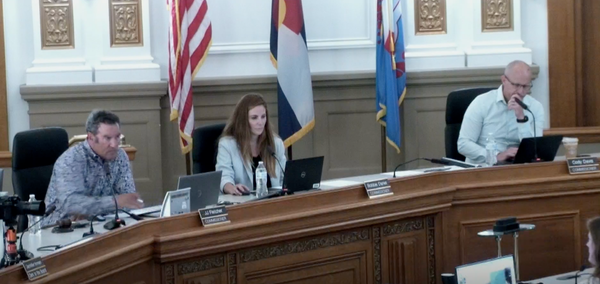
Mesa County Commissioners unanimously approved assigning $6,234,211 in Private Activity Bonds to the Grand Junction Housing Authority. Grand Junction City Council followed by adding its own $1,765,789 allocation, bringing the total commitment to $8 million.
For residents, the important point is this: the bonds are not a direct city or county taxpayer expense. They are backed by private investors and carry lower interest rates because they are federally tax-exempt.
The financing structure matters because Private Activity Bonds help unlock 4% Low-Income Housing Tax Credits, one of the key tools used to make large affordable rental projects financially viable.
First Phase Planned for Seniors and Veterans
The first phase of the Salt Flats project is called Ascent at Salt Flats. It is planned as a 144-unit affordable housing development along the I-70B corridor.
The project is designed for seniors and veterans earning between 0 and 60% of area median income. Thirteen units are specifically set aside for unhoused veterans.
Construction is expected to begin later in 2026, with completion anticipated in 2027.
The broader Salt Flats site is much larger. The city purchased the 21.78-acre property in early 2025 for $3.2 million. Over time, the site is expected to accommodate between 324 and 550 total homes across multiple phases.
Those future phases could include affordable rentals, deed-restricted for-sale homes, and possibly some market-rate housing.
A separate Rural Homes phase is planned to add 48 deed-restricted homes for sale. Those homes are expected to be priced from roughly $225,000 to $349,000 for households earning up to 100% of area median income.
One clarification: the $2.2 million Proposition 123 grant sometimes referenced in connection with Salt Flats was awarded earlier for the land purchase. This week’s bond approvals are a separate financing step tied to affordable housing tax credits.
Why the Bond Package Matters
Affordable housing projects often rely on several funding sources layered together. Land, construction costs, interest rates, tax credits, and long-term affordability requirements all shape whether a project can move forward.
The bond assignment does not build the homes by itself. But it helps make the financing package work.
That is especially important at Salt Flats because the site is one of Grand Junction’s more visible attempts to create a larger pipeline of homes affordable to seniors, veterans, working households, and buyers who are increasingly priced out of the local market.
In a region where wages often lag behind housing costs, the project could become one of the city’s most important housing efforts over the next several years.
Neighbors Push Back on Montano Vista Rezoning
Housing was also a major topic during public comment at the Grand Junction City Council regular meeting.
Residents raised concerns about a proposed rezoning of a 5.58-acre parcel known as Montano Vista, located near 29 and B½ Roads.
The proposed zoning, MU-1 Mixed Use, could allow more intensive development than what currently surrounds the parcel. Neighbors argued that commercial or higher-density infill could push more traffic into existing residential streets and change the character of the area.
Several residents asked council to instead apply RL-4 Residential Low zoning, which they said would better match nearby single-family homes.
No final vote was recorded at the meeting.
The discussion reflects a larger challenge for Grand Junction: the city is trying to add housing and manage growth, but many residents are concerned about how that growth will affect traffic, safety, and neighborhood character.
Transportation Planning Around 29 Road Moves Forward
Council also unanimously approved a resolution establishing a Regional Transportation Management Organization within the Mesa County planning office.
The organization is intended to help manage congestion around the proposed I-70 interchange at 29 Road as development increases along the corridor.
That matters because 29 Road is one of the places where land use, housing demand, commercial growth, and transportation planning are all converging.
As new housing and business activity move toward the corridor, local officials are trying to avoid a situation where roads, intersections, and neighborhood streets are forced to absorb growth without a coordinated transportation plan.
Stormwater and Fire Code Fees Also Approved
City Council also authorized a construction and cost-share agreement with Mesa County for a regional stormwater detention basin at 600 28¼ Road.
Regional stormwater projects are often less visible than housing or road decisions, but they are essential as more land is developed. Detention basins help manage runoff and reduce the risk that stormwater problems are pushed downstream or into nearby neighborhoods.
Council also adopted updated fee schedules connected to the local Wildfire Resiliency Code’s building administration process.
The Bigger Picture
Grand Junction’s growth questions are becoming more concrete. Salt Flats could add hundreds of homes, while rezoning and transportation debates show how closely residents are watching density, traffic, and neighborhood change.