Here is a comprehensive wrap-up of municipal activity across Western Colorado for the week ending June 6, 2026.
Local Government & Core Decisions
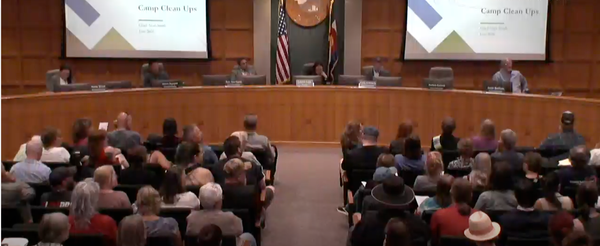
Grand Junction City Council: Public Property Camping Rules Overhauled
Following a packed public hearing on Wednesday evening, June 3, the Grand Junction City Council voted 5-2 to pass a critical amendment to municipal code sections 12.04.060 and 12.04.080. The vote systematically strips away a 2019 provision that explicitly barred law enforcement from clearing public encampments if regional emergency overnight shelters were full.
The legal pivot directly follows the U.S. Supreme Court’s landmark decision in City of Grants Pass v. Johnson, which overturned the prior Martin v. Boise mandate.
Practically, Grand Junction Police officers are no longer legally required to verify regional shelter bed availability prior to enforcing outdoor camping prohibitions, clearing the way for immediate enforcement near the Colorado River trail corridors.
Public comment exposed intense friction over enforcement timelines and shelter shortages following the consolidation of HomewardBound assets into the 29 Road Pathways facility. Proponents cited rising fire risk and trail degradation, while opponents noted a complete lack of alternative placement options.
"The proposed ordinance targets our unhoused neighbors without addressing the root cause of why they are on the street." — The Reverend Nicole Campbell, speaking during public comment
"We need to use this legal authority to protect our public spaces and restore safety along the riverfront trails." — Grand Junction resident Ruth Kennet
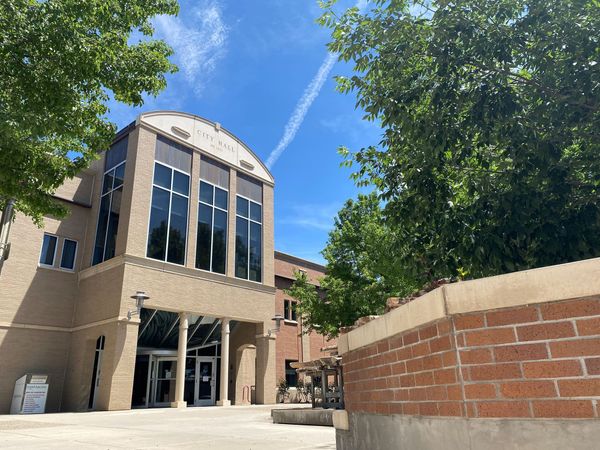
City of Montrose: Emergency Roundabout Contract Rescue & Sewer Bottlenecks
City Council approved a $2,514,523 contract with Ridgway Valley Enterprises to immediately take over construction of the Rio Grande and East Oak Grove roundabout. This emergency procurement comes just two weeks after the city formally terminated its previous contract with Earthworx on May 21 for a material breach of contract.
By securing original unit pricing from the project's runner-up bidder and deploying a 10% structural contingency, administrators avoided a major cost blowout. However, the scramble highlights severe infrastructure pain points: during an associated June 1 work session, staff confirmed the city's northeast quadrant has hit absolute sewer capacity during peak flows.
No further commercial or residential development can be approved in that sector until a massive $4.32 million trunkline extension is executed.
City of Montrose: Behavioral-Health Co-Responder Grant Restructuring
Council formally approved Resolution 2026-07, endorsing a pass-through application for up to $280,000 from the Colorado Department of Human Services Co-Responder Grant Program to fund joint clinician/law enforcement crisis teams through Axis Health System.
Under updated state mandates, private mental health entities can no longer apply directly, forcing the City of Montrose to step in as the direct administrative and financial pass-through agent to preserve regional mental health co-response units for the July 1, 2026 – June 30, 2027 cycle.
Public Lands & Natural Resources
Northwest Region Free Fishing Mandate
CPW has suspended all state fishing license and Habitat Stamp requirements for Saturday, June 6, and Sunday, June 7. The fee waiver applies to all public rivers, reservoirs, and mountain streams statewide.
CPW officials issued an explicit warning to Western Slope anglers: the weekend is a suspension of fees, not resource protections. All standard environmental protections—including daily species bag limits, possession caps, and localized artificial fly-and-lure restrictions—remain actively enforced by field rangers.
Watershed Warning & Early Snowmelt Adjustments
Following a formal shift into a severe regional drought designation, the city issued an official municipal Drought Warning. March snow surveys for the critical Kannah Creek watershed peaked at an abysmal 41% of the 35-year historical average for snow water equivalent.
An unseasonably warm spring caused mountain runoff to trigger nearly six weeks earlier than normal. While the city currently holds 10,000 acre-feet across 19 storage reservoirs, officials are demanding immediate voluntary restrictions to insulate storage reserves.
Tighter mandatory restrictions accompanied by penalizing "drought rates" up to three times standard costs will be implemented if residential summer usage surges.
Colorado River Basin Forecasting Slump
The Natural Resources Conservation Service (NRCS) confirmed that projected May-through-July runoff forecasts across the Western Slope are tracking at a historically weak 22% to 24% of the historical median.
Out of 86 federal basin forecast points, nearly half are tracking at the lowest or second-lowest water volumes ever recorded in their period of record. Most notably, the Colorado River gauge near Cameo is showing a record volume departure of 1.49 million acre-feet, marking the single lowest projected flow departure in 73 years.