Montrose Students Pitch Businesses, Nonprofits, and Creative Ventures Through Innovative Spark Lab Program
Students from across the Western Slope showcased businesses, nonprofits, and creative ventures during Montrose’s May 13 Spark Lab forum. The program blends entrepreneurship, mentorship, and hands-on learning to help students turn ideas into real-world projects and opportunities.
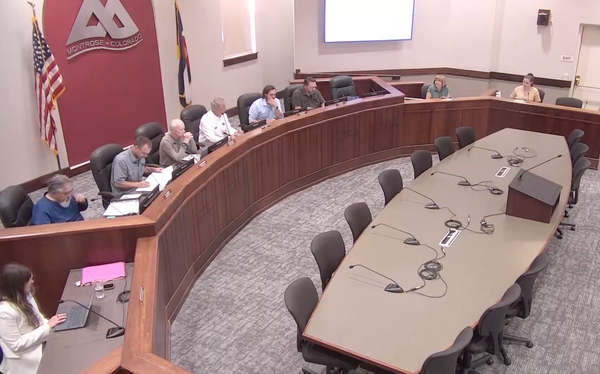
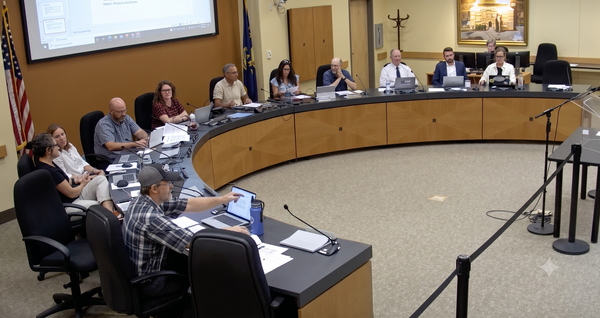
A May 13 community forum in Montrose highlighted a growing effort to rethink career education on the Western Slope, as students, educators, and nonprofit leaders shared how the Spark Lab entrepreneurship program is helping students turn ideas into real-world projects, businesses, and community initiatives.
Hosted as part of a public forum featuring students from Montrose, Olathe, Ridgway, and surrounding districts, the event showcased a wide range of youth-led ventures, from lawn care businesses and skate shops to nonprofit art workshops, animation studios, and documentary filmmaking.
But the larger conversation focused on something deeper: how schools can better prepare students for a rapidly changing future by emphasizing creativity, entrepreneurship, confidence, and hands-on learning.
A New Approach to Career Pathways
Montrose County School District Superintendent Dr. Carrie Stephenson said the Spark Lab initiative grew out of broader efforts to strengthen career-connected learning opportunities across the Western Slope.
The program operates through the West Slope Schools Career Collaborative, or WHISK, a partnership between Montrose, Delta, Gunnison, and Ridgway school districts designed to expand access to career pathways regardless of school size or geography.
Spark Lab itself was developed in partnership with Colin Lacy, founder of Homegrown Pathways and former CEO and co-founder of MakerUSA.
Lacy said the idea emerged after conversations with school leaders revealed a major gap in entrepreneurial opportunities for rural students.
“We wanted to find a way to bring some of that work to my home region,” Lacy said during the forum. “This is about empowering young people around the importance of who they are as individuals, the importance of their ideas, and the importance of taking action on those ideas.”
Students Turn Ideas Into Real Businesses and Projects
Throughout the event, students described how Spark Lab helped transform interests and personal challenges into actionable ventures.
Lawn Care Business Expansion
Student Colton Williams shared how the program helped him grow a lawn care business he started with his younger brother three years ago.
Using $700 in seed funding from Spark Lab, Williams purchased new mowing equipment and plans to expand services beyond his neighborhood.
Local Skate Shop Startup
Another student, Gus Bray, launched a mobile skate shop concept aimed at addressing the lack of skate retail options in Montrose.
After receiving $1,000 in funding, Bray said he has already generated roughly $600 in sales and received strong demand from local skaters requesting custom products.
Climbing Accessibility Initiative
Student Austin Williams focused on reducing barriers to participation in youth climbing programs, describing the sport as financially inaccessible for many families.
His project received $1,000 to help fund equipment purchases and future fundraising efforts aimed at making climbing more affordable.
Youth-Led Animation Studio
Matthew Yates and his collaborator used Spark Lab funding to expand a growing animation and creative media project originally launched through YouTube.
Yates said the project was partly inspired by concerns about labor practices and AI overuse in the animation industry.
“We wanted to fix it and add our stuff to it,” Yates said.
The project now includes animation software, music production tools, and a growing online audience of more than 3,600 subscribers.
Building Safe Spaces Through Art
Student Ekko Armstead described creating a nonprofit called Echolocations Art, which offers free art workshops for youth at a local coffee shop.
Armstead said the goal was to create safe and creative spaces for young people in the community.
“I really wanted to create a safe space and encourage creativity and artwork in our community,” she said.
Documentary Filmmaking and Digital Identity
Student Jack Holmes shared plans for a documentary project called “Theft by Pixels,” exploring how social media impacts identity, passion, and self-discovery among young people.
Holmes said the experience helped him move beyond ideas and into practical execution.
“You just have to do something,” he said. “It’s about getting over the mental barrier and starting.”
Why Students Say the Program Feels Different
Students repeatedly contrasted Spark Lab with traditional classroom experiences, describing the program as more personalized, collaborative, and hands-on.
Participants emphasized:
• Real-world application • Mentorship from entrepreneurs and community leaders • Public speaking practice • Collaboration and peer feedback • Direct financial investment in their ideas • Confidence building and leadership development
One major difference, students said, was that every participant receives seed funding rather than competing against classmates in a “winner-take-all” model.
Lacy emphasized that Spark Lab intentionally avoids the “Shark Tank” approach.
“Every student receives some level of seed funding,” he said. “Everyone’s ideas mattered and need to be supported.”
Funding amounts this year ranged from roughly $300 to $1,000 per student project.
Teachers See Increased Engagement and Confidence
Teachers at the forum said the program has significantly increased student engagement and self-confidence.
Olathe teacher Randall Spar said students became deeply invested once they were allowed to pursue ideas they genuinely cared about.
“The level of engagement is astronomically exponential,” Spar said.
Peak Academy teacher Amber Bray said one of the most surprising aspects was how many highly capable students initially lacked confidence in themselves despite already accomplishing impressive things independently.
“It was really cool to watch them have to own their own strengths,” Bray said.
Teachers also emphasized that the program still incorporates substantial academic skill-building through writing, planning, budgeting, presentation design, and communication exercises.
Rural Innovation and the Funding Challenge
Lacy noted that while roughly 20 percent of Americans live in rural communities, only about 2 percent of philanthropic and public funding reaches those areas.
Spark Lab distributed more than $50,000 in direct student seed funding this year through support from private donors and foundations, including the Mortgage Family Foundation.
The long-term goal, organizers said, is to scale the model throughout more rural districts across the Western Slope.
Preparing Students for a Different Future
Superintendent Stephenson argued that programs like Spark Lab reflect the changing realities of modern education in an era shaped by artificial intelligence, digital technology, and evolving workforce expectations.
“These kids do have AI in their pockets,” Stephenson said. “It is incumbent upon us as educators to make sure we are evolving the experience for them.”
She said schools must increasingly focus on experiences that require critical thinking, communication, creativity, and applied learning rather than rote memorization alone.
The Bottom Line
The May 13 Montrose forum offered more than a showcase of student projects.
It highlighted a growing regional effort to rethink how rural students are prepared for life after graduation by combining entrepreneurship, mentorship, creativity, and community investment into the school day itself.
For many students involved, the experience appears to have done more than teach business skills. It helped them see their own ideas, and themselves, differently.
Readers who want to hear directly from the students, teachers, and organizers behind Spark Lab can watch the full May 13 forum session here:
Water levels in the Wolford Mountain Reservoir in Grand County, which dams a tributary of the Colorado River, have dropped by more than 30 feet during extreme drought conditions in 2026. (Photo by Chase Woodruff/Colorado Newsline)